


Published: May 21, 2026 | By: Michael Zhang, Senior Process Engineer at Qingdao OULI Machinery Co., Ltd.
In the mechanical recycling of rubber, much attention is given to the desulfurization reactor or the refining mill. However, experienced production managers know that a rubber crumb mixer plays an equally critical role in determining the final quality of reclaimed rubber.
A rubber crumb mixer is not merely a blending tank; it is a preparatory unit that directly influences chemical absorption, thermal uniformity, and the plasticity of the end product. As global demand for consistent, high-grade reclaimed rubber rises, understanding the operational standards of this equipment has become essential for plant efficiency.
Why the Mixing Stage Matters More Than You Think
Before powdered rubber particles enter the desulfurization stage, they must be uniformly coated with softening agents, activators, and fibers. Inefficient mixing leads to:
- Inconsistent desulfurization: Some particles become over-softened (sticky), while others remain under-reacted.
- Higher energy consumption: The subsequent refining machine has to work harder to correct inhomogeneity.
- Increased roller wear: Uneven feed causes point loading on refining mill rollers, reducing their service life.
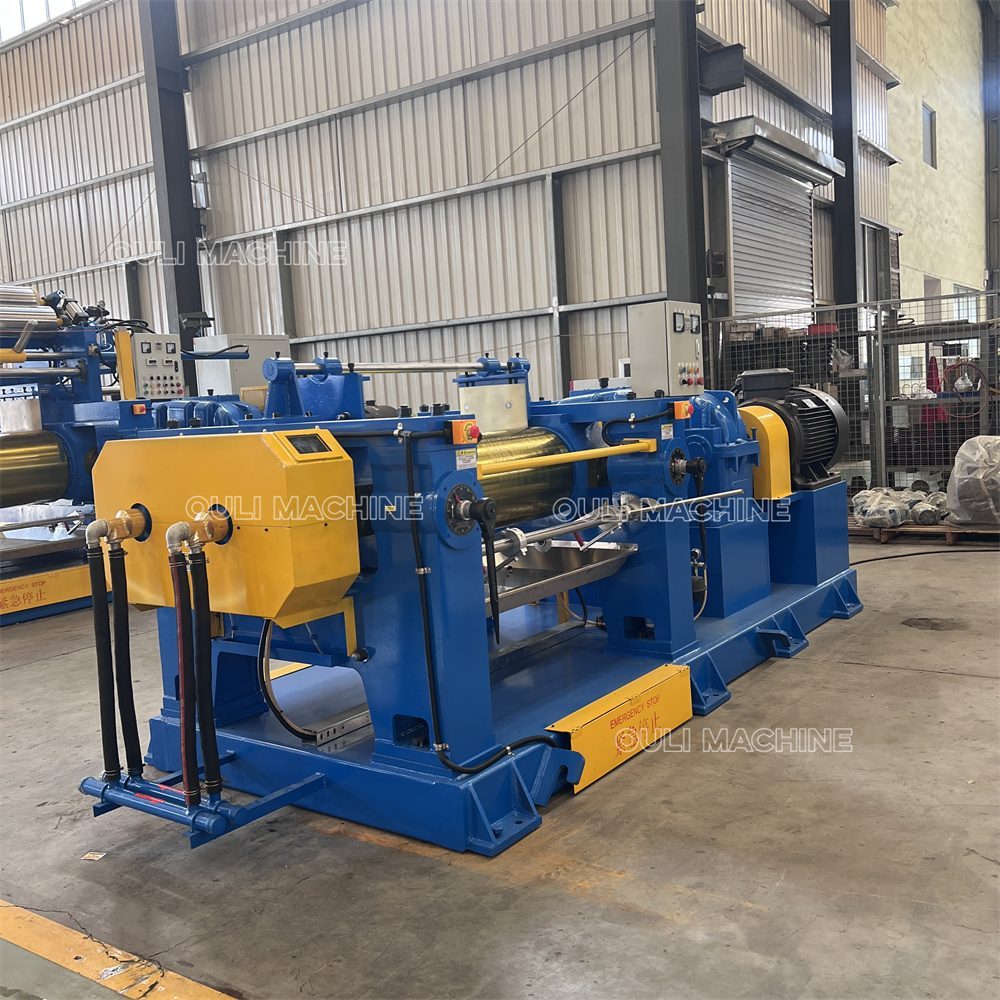
A modern rubber crumb mixer addresses these issues through controlled shear force and thermal management, creating a homogeneous “green compound” that feeds perfectly into a reclaimed rubber making machine line.
Key Technical Features of an Effective Mixer
When evaluating a rubber crumb mixer for your reclaimed rubber production, look beyond basic rotation speed. The following engineering parameters correlate directly with output consistency:
1. Mixing Chamber Geometry and Material
A well-designed chamber prevents dead zones where unmixed crumb accumulates. High-quality mixers use abrasion-resistant steel (e.g., Hardox or equivalent) to withstand the abrasive nature of tire-derived rubber crumb.
2. Rotor Design and Configuration
The rotor profile determines the mixing intensity. Intermeshing rotors with variable speed drives allow operators to adjust the shear rate—low for gentle blending of fibers, high for breaking down agglomerates before desulfurization.
3. Temperature Control System
Liquid softening agents have an optimal viscosity range for coating rubber particles. A jacket-type heating/cooling system ensures the mixer maintains 70–120°C (depending on the recipe), preventing premature oxidation or agent evaporation.
4. Dust-Sealing Mechanism
Rubber crumb generates fine carbon black dust. A labyrinth seal combined with an air-purge system prevents dust leakage, protecting the gearbox and bearings—critical for continuous 24/7 operations.
Integration with the Reclaimed Rubber Production Line
The rubber crumb mixer is the first unit in a typical five-stage reclaimed rubber line:
1. Crushing → 2. Mixing (with softening agents) → 3. Desulfurization → 4. Refining/Sheeting → 5. Testing
OULI’s approach integrates the mixer with a PLC control module that syncs mixing time, temperature, and discharge speed with the downstream desulfurization unit. This interconnection eliminates batch-to-batch variance, a common pain point in older plants.
> “Many customers focus on the refining machine’s roller hardness (72-75 HSD for our LTG-H alloy rollers) but overlook that poor mixing ruins even the best rollers. A homogeneous feed extends roller life by reducing asymmetric thermal shock and mechanical stress.”
> — Michael Zhang, OULI Machinery
Environmental and Efficiency Gains
Modern rubber crumb mixers contribute directly to sustainability goals:
- Reduced chemical waste: Uniform coating means fewer softening agents are needed.
- Lower dust emissions: Sealed designs minimize airborne particulates.
- Energy savings: Automated mixing cycles avoid over-processing, cutting electricity use by up to 12% compared to manual control.
Conclusion
For reclaimed rubber producers aiming to upgrade their process, the rubber crumb mixer deserves the same level of scrutiny as the desulfurization reactor or refining mill. Consistent mixing translates directly to consistent product specifications—lower acetone extract, higher tensile strength, and smoother sheeting.
When planning a new line or retrofitting an existing one, prioritize mixers with robust rotor metallurgy, precise temperature control, and dust-proof bearings. These features ensure that every batch enters the desulfurization stage with the same composition, reducing rejects and maximizing profitability.
---
FAQ: Rubber Crumb Mixer
Q1: What is the primary function of a rubber crumb mixer in a reclaimed rubber line?
A: Its primary function is to uniformly coat vulcanized rubber crumb with softening agents (e.g., reclaiming agents, oils, activators) before desulfurization. This ensures that each particle receives the same chemical treatment, leading to consistent plasticity in the final reclaimed rubber.
Q2: Can I use a general-purpose industrial mixer instead of a dedicated rubber crumb mixer?
A: Not recommended. General mixers lack the abrasion-resistant linings, dust seals, and temperature control needed for rubber crumb. The abrasive nature of crumb will quickly wear standard mixers, leading to metal contamination in your batch and frequent breakdowns.
Q3: How does mixing time affect the quality of reclaimed rubber?
A: Under-mixing results in spotty desulfurization (some hard particles remain). Over-mixing can generate excessive heat, causing premature cross-link breakage and making the crumb sticky. Optimal time is recipe-specific, typically 8–15 minutes per batch.
Q4: What maintenance does a rubber crumb mixer require?
A: Key maintenance includes: weekly inspection of rotor tip clearance, daily check of the dust seal air pressure, monthly lubrication of bearings (automatic lubrication systems are preferred), and bi-annual re-calibration of temperature sensors.
Q5: How do I know if my current mixer is causing quality problems?
A: Common signs include: inconsistent Mooney viscosity across batches, higher-than-normal chemical consumption, and visible specks of unsoftened crumb in your sheeting roll. A simple “spot test” (taking samples from the top, middle, and bottom of the mixer) can reveal homogeneity issues.
Q6: Does the mixer impact the energy consumption of the downstream refining machine?
A: Yes, significantly. A homogeneous mix reduces the workload on the refining mill’s rollers, lowering amperage draw and minimizing roller wear. Plants upgrading their mixer often see a 5–8% drop in refining stage energy use.
---
About the Author:
Michael Zhang is a Senior Process Engineer with 14 years of experience in mechanical rubber recycling systems. He leads the technical solutions team at Qingdao OULI Machinery Co., Ltd., specializing in the integration of crushing, mixing, and desulfurization units for tire-derived reclaimed rubber plants worldwide.
 2026/05/29Qingdao Ouli Machine Co., Ltd. Invites You to Expobor 2026 – Brazil Rubber Industry Expo
 2026/05/21Rubber Crumb Mixer: Why Proper Homogenization is the First Step to High-Quality Reclaimed Rubber
- 2026/05/12Rubber Banbury Mixer: Optimize Your Rubber Compounding Process with High Shear Efficiency

leave your message
